
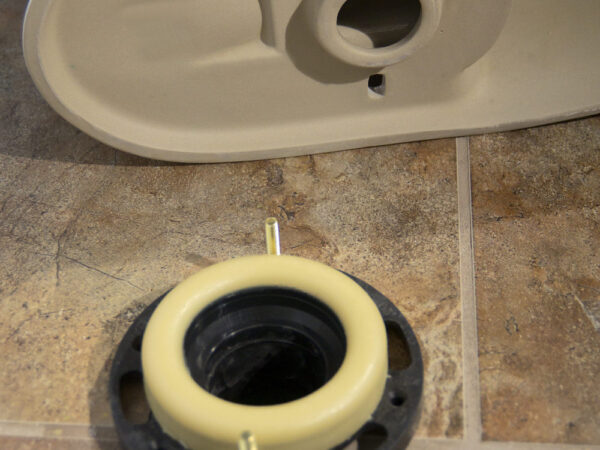
A leaking toilet does not always mean the toilet itself is the problem. Sometimes, the leak starts underneath the fixture, where the toilet connects to your home’s drain system. One component that can fail in this area is the toilet flange.
The flange connects the toilet to the drainpipe and helps secure it to the floor. A wax ring or another seal sits between the toilet and flange to create a watertight connection. If the flange becomes damaged, loose, corroded, or improperly installed, water can escape around the base. Because the flange is hidden, leaks may go unnoticed until you see water, notice movement, or discover damaged flooring.
What Is a Toilet Flange?
A toilet flange is a fitting beneath the toilet that connects the fixture to the drainpipe. It also provides the mounting point for the bolts that hold the toilet in place. Because the flange has both a plumbing and structural role, problems can affect the toilet’s stability and the seal around the drain. These can include:
- A Cracked or Broken Flange: Flanges can crack or break because of age, corrosion, improper installation, or repeated movement of the toilet. Once damaged, the flange may no longer hold the toilet securely against the drain connection. Water can then escape when the toilet is flushed and seep into the flooring or subfloor.
- A Loose or Rocking Toilet: A toilet should stay firmly in place. If it rocks or shifts, that movement can stress the flange and the seal beneath it. Loose mounting bolts may contribute to the problem, but overtightening them can crack the toilet or damage the flange. A rocking toilet should be inspected to determine whether the flange or surrounding floor needs repair.
- An Improperly Installed Flange: The flange must sit at the correct height and be securely attached. If it is too high, too low, or improperly positioned, the toilet may not form a reliable seal. This can happen after bathroom flooring is replaced. Changes in floor height may leave the existing flange at the wrong level, increasing the risk of leaks when the toilet is reinstalled.
- A Damaged Toilet Seal: Sometimes the flange is fine, but the wax ring or other seal between the toilet and flange has failed. A seal can become damaged or displaced, allowing water to leak during flushing. If a toilet is removed, a new seal is generally installed rather than reusing the old one.
- Corrosion and Age: Flanges can deteriorate over time. Depending on the material and surrounding conditions, they may corrode, weaken, or become brittle. An older flange may begin with a small leak that gradually worsens.
Signs of a Toilet Flange Leak
Water around the base of the toilet is a common warning sign. You may also notice that the toilet rocks, the nearby flooring feels soft or looks discolored, or an unpleasant odor develops.
However, water near a toilet can also come from the supply line, tank, fill valve, condensation, or another connection. A plumber can identify the source before repairs begin.
Why You Shouldn’t Ignore the Leak
Even a small leak can cause damage if it continues. Water can seep into the flooring and subfloor, leading to staining, deterioration, odors, and more extensive repairs. Because flange leaks happen in a concealed area, early attention is important. Prompt inspection can help limit damage around the toilet.
Frequently Asked Questions
How long does a toilet flange last?
There is no exact lifespan. It depends on the flange material, installation quality, moisture exposure, and the amount of movement placed on the toilet. A properly installed flange can last many years.
Can you replace a flange without replacing the toilet?
Usually, yes. The toilet typically needs to be removed temporarily so the flange can be accessed. If the toilet is still in good condition, it can often be reinstalled afterward.
Can a toilet flange be repaired, or does it always need to be replaced?
Not every damaged flange requires complete replacement. Depending on the type and extent of the damage, a plumber may be able to use an appropriate repair solution. Severely broken, corroded, or improperly positioned flanges may require replacement to create a reliable connection.
Call Liberty Plumbing for Toilet Leak Repairs
A leak around your toilet may seem minor, but water escaping underneath the fixture can damage flooring and lead to bigger problems. Liberty Plumbing can determine whether the leak is coming from the flange, toilet seal, plumbing connection, or another source and recommend the right repair. If your toilet is leaking, rocking, or showing other signs of trouble, contact Liberty Plumbing today to schedule professional toilet repair service.